Native Plants for Adelaide Gardens
Natives for Adelaide's limestone plains, sandy foothills and long, dry summers.
What growing in Adelaide actually means
Adelaide is Australia's driest capital, with a classic Mediterranean pattern: most of the rain falls in winter, and summer brings weeks of dry heat. The Hills are a different story. Climb into Stirling or Crafers and the air is cooler, the rain heavier, and plenty of plants that sulk on the plains suddenly perk up.
The plains (most of metropolitan Adelaide): clay soils laced with limestone. The topsoil is usually neutral to alkaline, and it gets more alkaline the deeper you dig. Some of that clay is famously reactive. If your house has a crack running up the wall, you've already met your soil.
The north-eastern foothills (Tea Tree Gully, Athelstone, Hope Valley): lime-free sands. These are the lucky gardens, where natives that fail elsewhere in Adelaide often succeed.
The coast: deep dune sand, very alkaline and a little salty.
The Hills: shallower, rockier and more acidic soils, plus a cooler, wetter climate. Up here, the climate matters more than the soil.
What catches out a lot of newcomers is the lime. Plenty of popular natives come from acidic soils on the east coast or in Western Australia, and in Adelaide's limestone they turn yellow, stall and slowly fade. Lime-tolerant locals grow happily in the same spot. Check for lime before you fall in love with a plant at the nursery (there's a simple test below).
Top native plants for Adelaide
These are reliable across most of Adelaide. For picks matched to your exact postcode, take the 2-minute quiz.
Trees
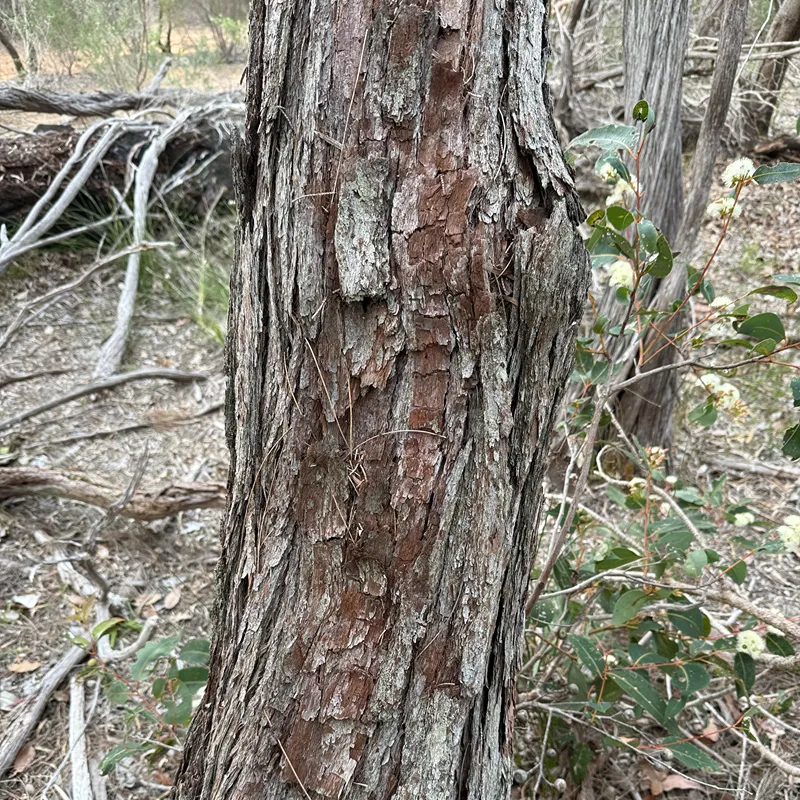
Yellow Gum
Eucalyptus leucoxylon
A true Adelaide Plains local. Its creamy or pink-red flowers feed honeyeaters through winter.
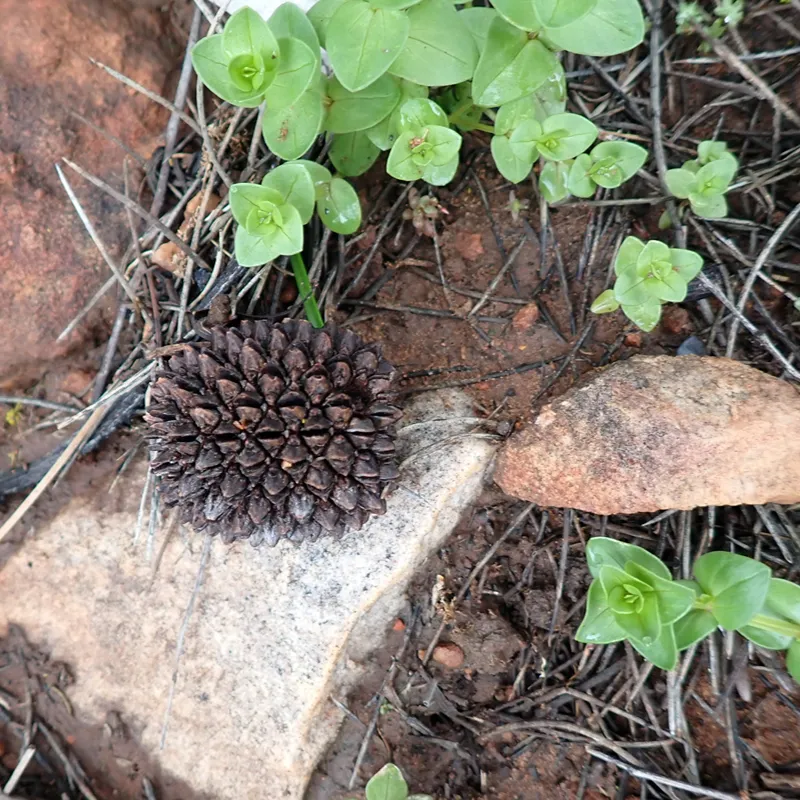
Drooping Sheoak
Allocasuarina verticillata
Another plains local. Its soft, weeping foliage whispers in the wind, and its cones feed yellow-tailed black cockatoos.
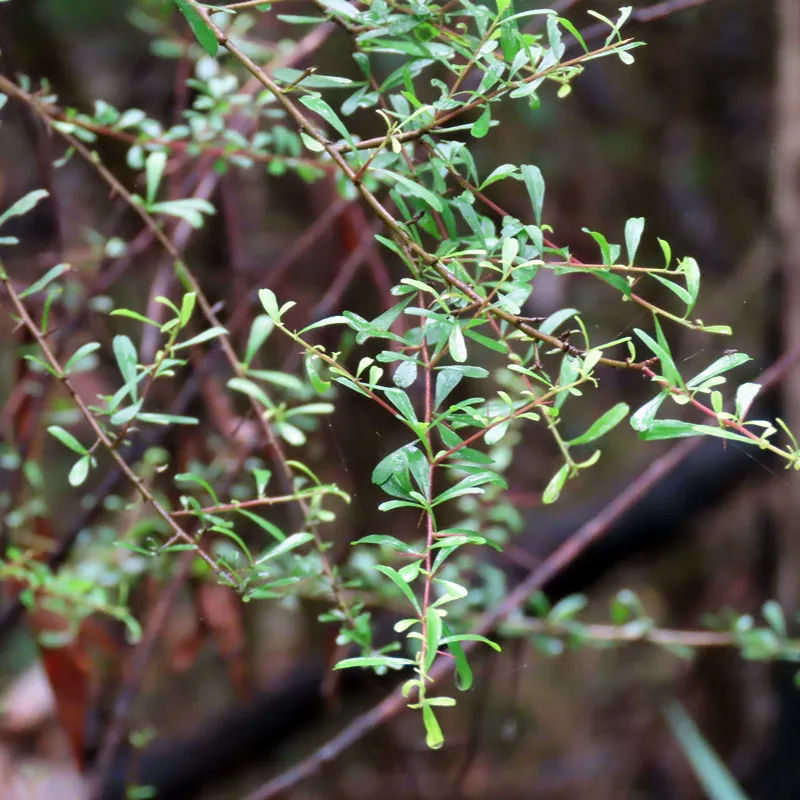
Sweet Bursaria
Bursaria spinosa
A small tree smothered in honey-scented white flowers in summer. It's a butterfly magnet.
Flowering shrubs
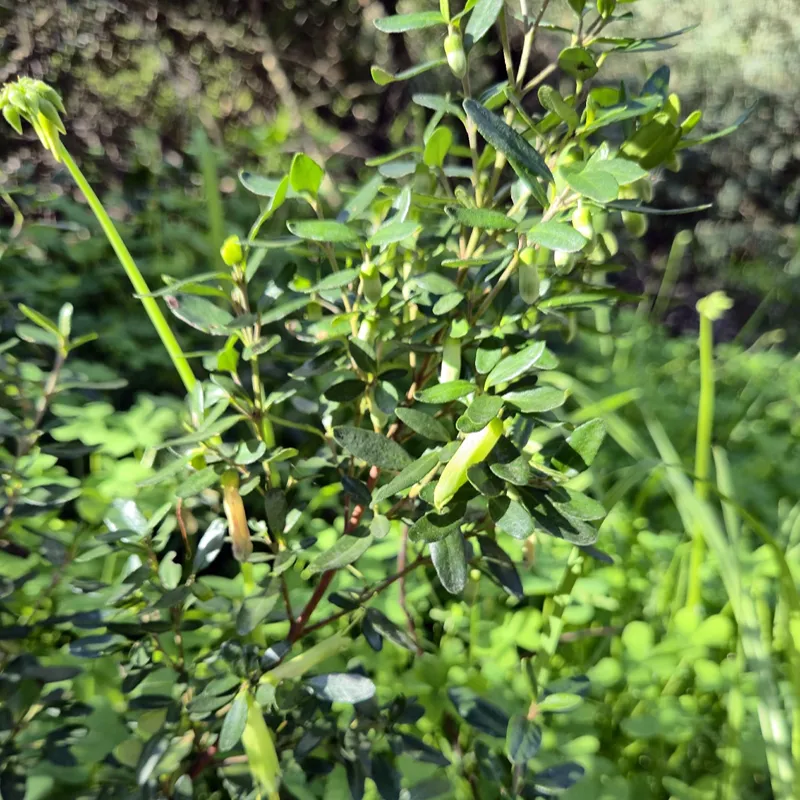
Rock Correa
Correa glabra
The toughest correa around. It handles lime, drought and dry shade, and flowers through winter.

Spotted Emu Bush
Eremophila maculata
Tubular flowers in reds, pinks or purples. It comes from inland South Australia and laughs at a dry summer.
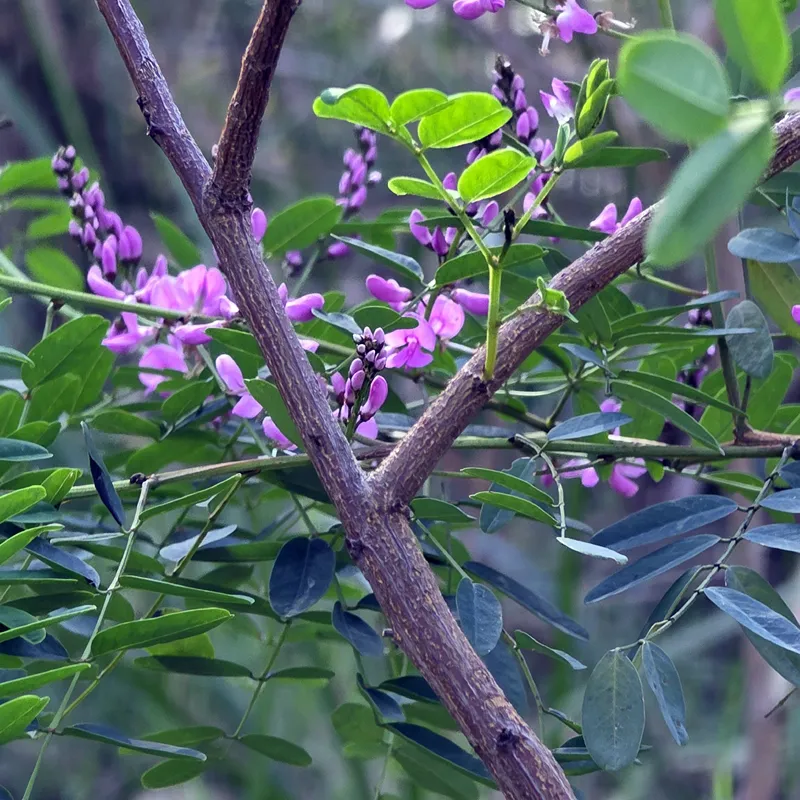
Native Indigo
Indigofera australis
Soft, feathery leaves and sprays of mauve pea flowers in spring. A Hills local.
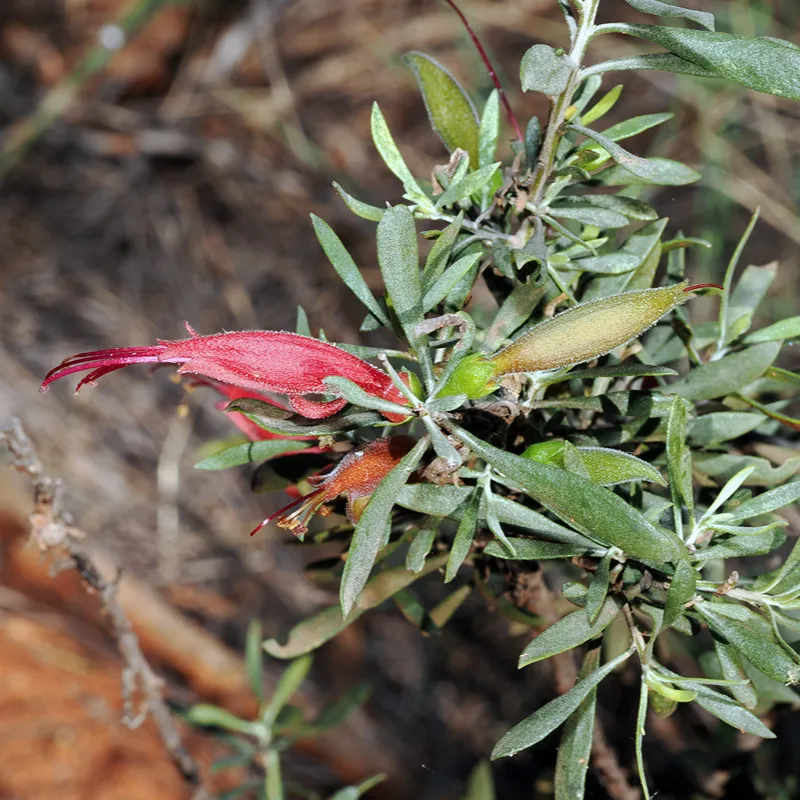
Tar Bush
Eremophila glabra
A tough, flowering emu bush that copes with heat and alkaline soil.
Hedges and screens
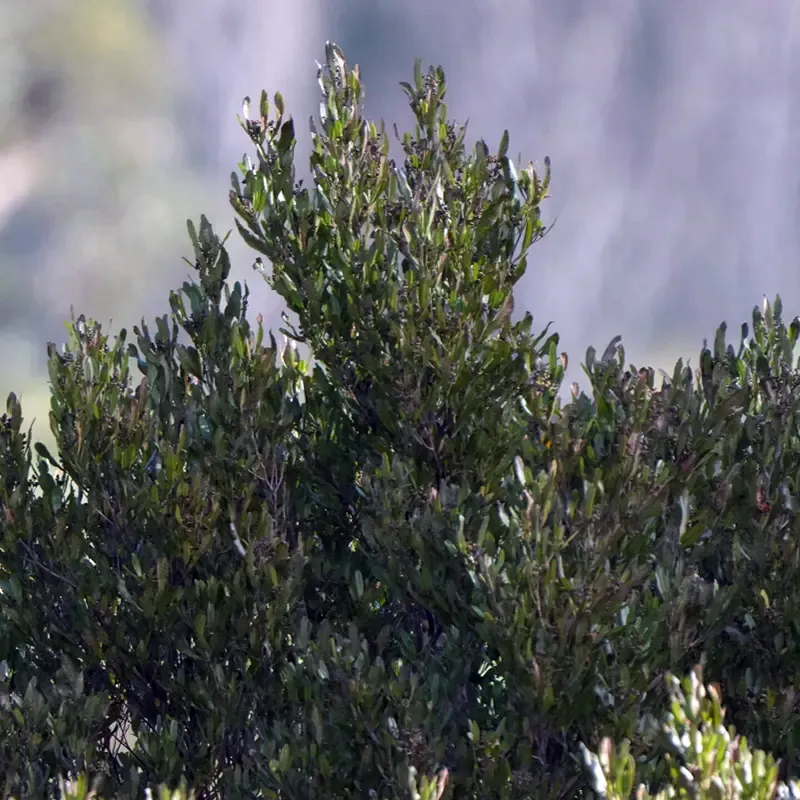
Sticky Hop Bush
Dodonaea viscosa
Fast, dense and drought-proof, with papery seed capsules that glow red in the sun.
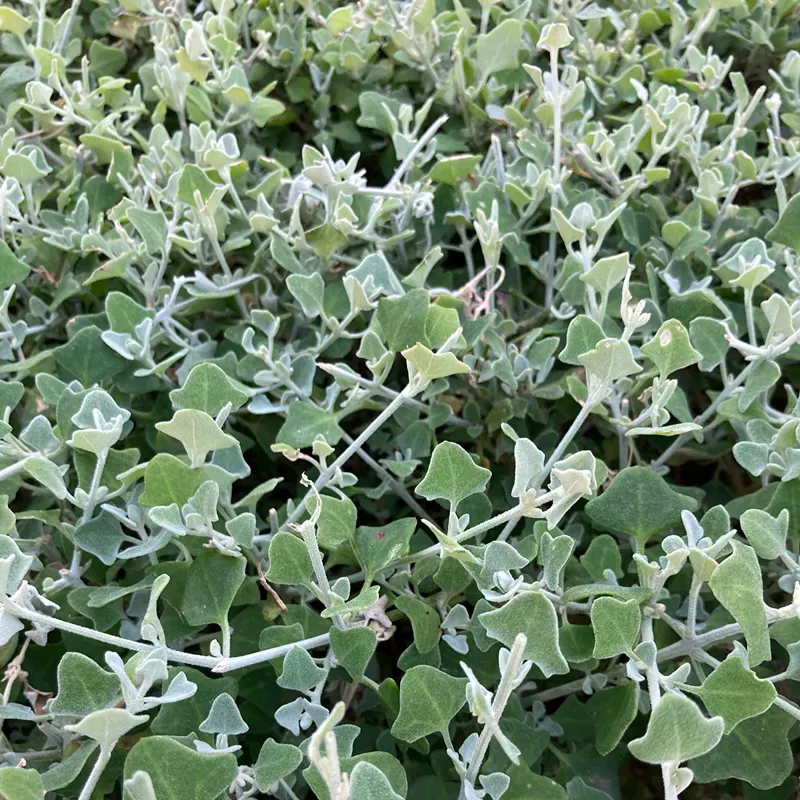
Saltbush
Rhagodia spinescens
A silver-grey hedge for coastal and plains gardens. Birds love the red berries.
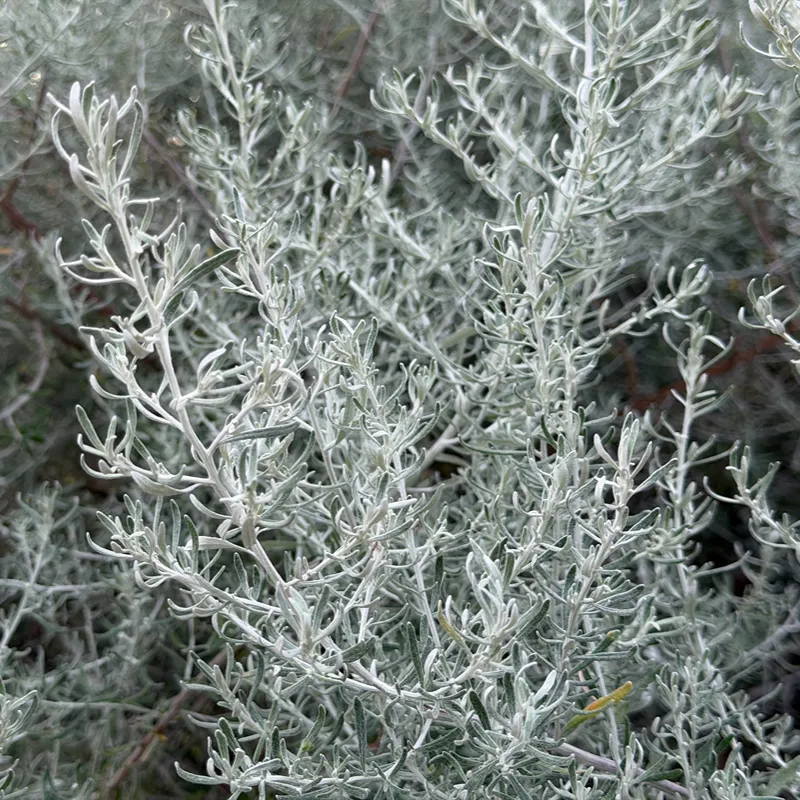
Coastal Daisy Bush
Olearia axillaris
Silver foliage that shrugs off salt wind and limestone.
Ground covers

Creeping Boobialla
Myoporum parvifolium
A flat, green, weed-smothering carpet, as tough on alkaline soil as it gets.
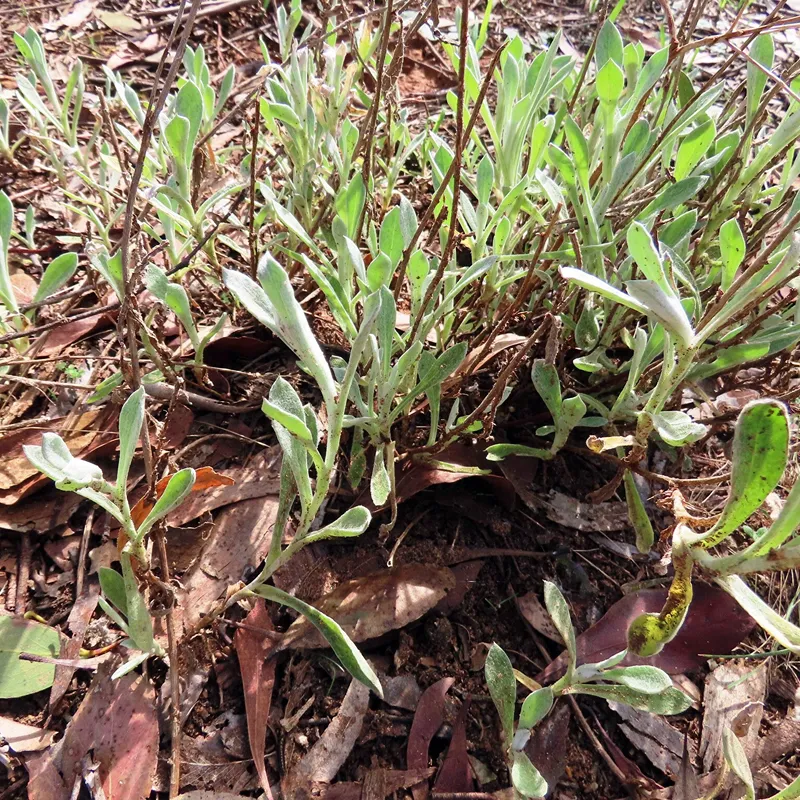
Common Everlasting
Chrysocephalum apiculatum
Golden button flowers for months and almost no water.
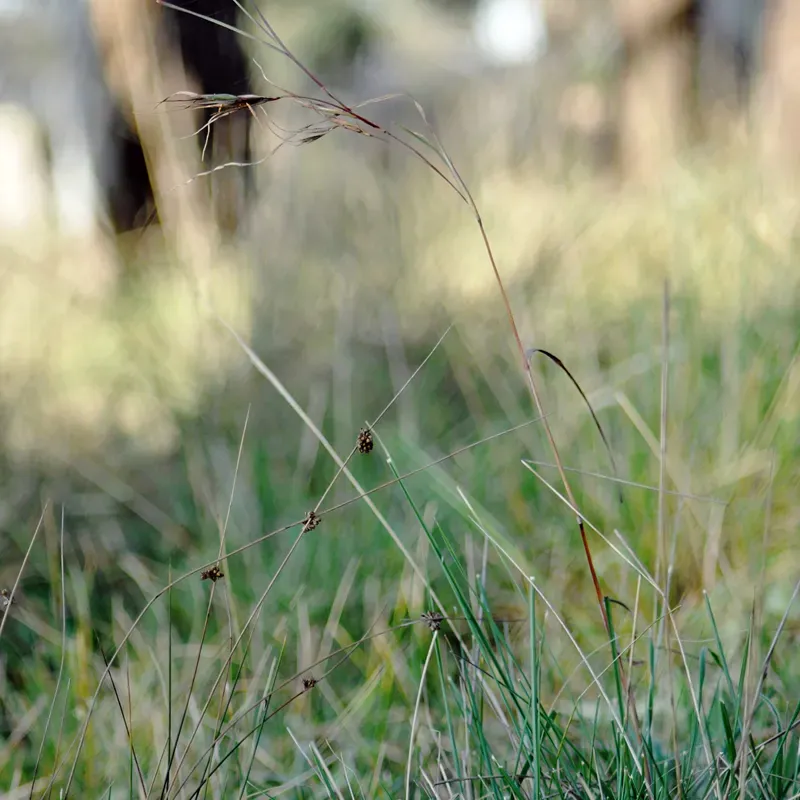
Kangaroo Grass
Themeda triandra
The grass that once covered the Adelaide Plains, with rust-red seed heads in summer.
Icons
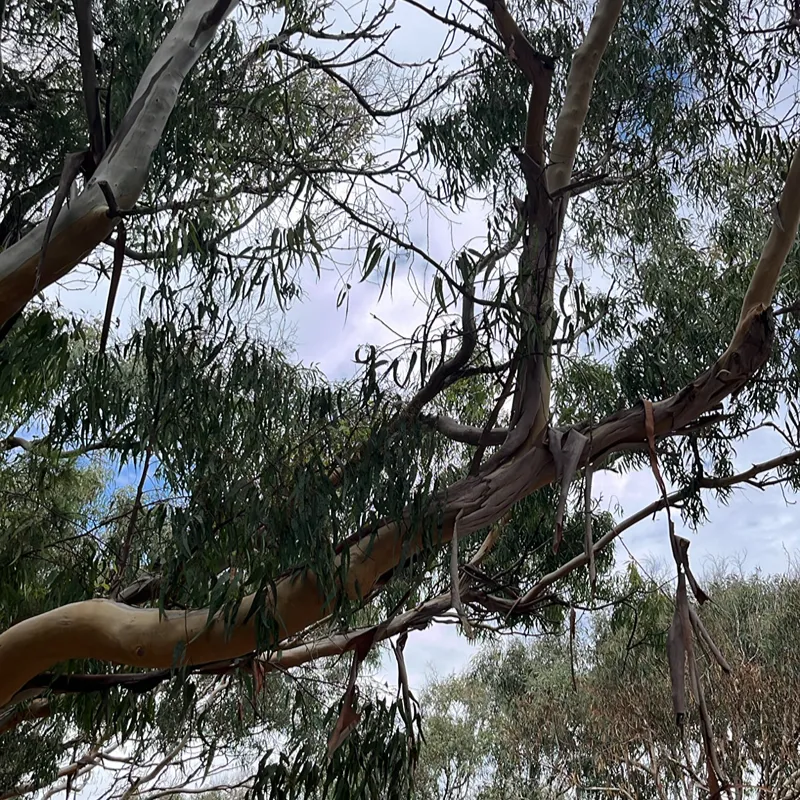
River Red Gum
Eucalyptus camaldulensis
The giant of the Torrens. It's only for big blocks, and keep it well away from the house on reactive clay.
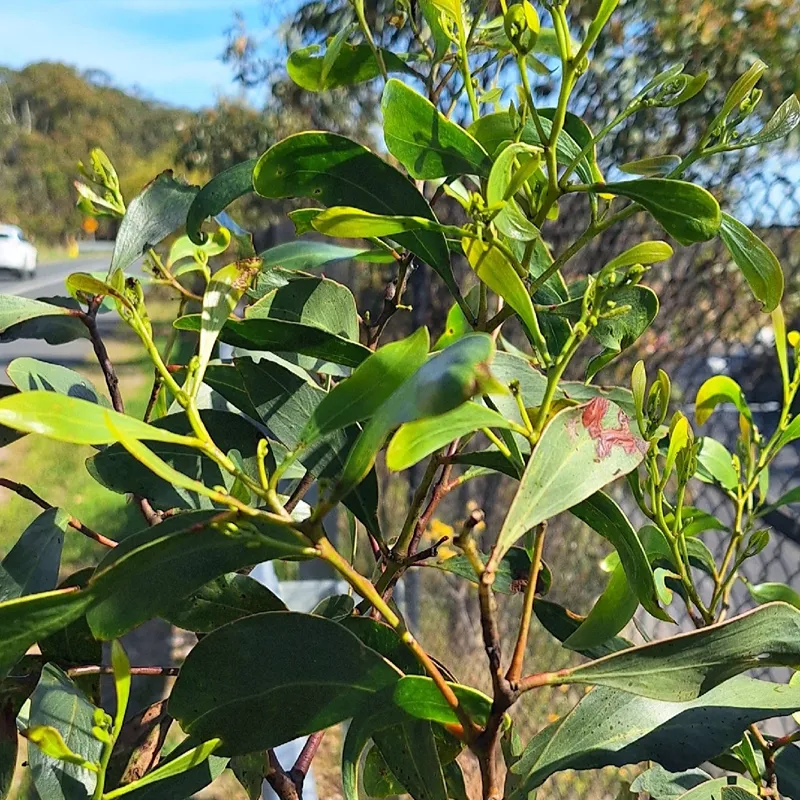
Golden Wattle
Acacia pycnantha
A South Australian native and the national floral emblem, flowering in late winter. Like many wattles it's short-lived, so enjoy it for the decade it gives you.
Adelaide problems and what to plant
Alkaline, limey soil. To check yours, drop a spoonful of soil into a glass and splash on some vinegar. If it fizzes, there's free lime in it. A cheap pH kit from a garden centre gives you a number: above about 7.5, stick to lime-tolerant plants. White, chalky lumps when you dig are another giveaway. Don't try to acidify a whole garden. Choose lime-tolerant natives such as Rock Correa, Spotted Emu Bush, saltbush and Yellow Gum, and save the fussy acid-lovers for pots.
Reactive clay. Big trees and thirsty plants near foundations can make cracking worse, because the clay shrinks as roots dry it out. Keep large trees well back from the house. When you plant in clay, rough up the sides of the hole with a fork so roots can push out into the surrounding soil instead of circling.
Long, dry summers. Plant in autumn, mulch well, and water deeply but rarely through the first summer. After that, most local natives cope on rainfall alone.
Where to buy native plants in Adelaide
Adelaide is well served for natives, from the government-run State Flora nursery and community nurseries growing local-provenance plants to garden centres with good native ranges. Check the list below for nurseries near you and who delivers.
Nurseries in Adelaide
Coromandel Native Nursery
SA
Show 10 moreShow fewer
One Tree Hill Garden Centre
One Tree Hill, SA
Glenberry Nursery
Carey Gully, SA
Delivers to Adelaide
Native gardens to visit in Adelaide
Wittunga Botanic Garden in Blackwood covers 13 hectares of water-wise plants from Australia and South Africa, including collections from Kangaroo Island and the Fleurieu Peninsula. Walk the loop around the lake and notice how many birds the plantings pull in.
Belair National Park is the place to see Adelaide Hills natives growing wild, on walking tracks a short drive from the city.
Adelaide native gardening FAQ
When's the best time to plant natives in Adelaide?
Autumn, once the first rains arrive. Plants get the whole wet season to establish before the summer heat.
Why are my native plants turning yellow?
Often lime. Many natives from acidic soils can't take up iron in Adelaide's alkaline soil, and their leaves yellow between the veins. Try the vinegar test above, then choose lime-tolerant species or grow fussy ones in pots.
Can I plant gum trees near my house in Adelaide?
Keep large trees well away from the house, especially on reactive clay. Smaller natives and shrubs are safer close to foundations.
Do natives need watering in Adelaide?
In the first summer, yes: a deep soak once a week. Once established, most local natives cope with Adelaide's rainfall.
Where can I see native gardens in Adelaide?
Wittunga for garden ideas, and Belair National Park for natives in the wild.
Browse all natives or start with a guide: Drought-tolerant native plants, Low-maintenance native plants, Small native trees, Plants for shade, Plants that attract birds, Summer-flowering natives for cool-temperate gardens.
Get natives matched to Adelaide
Take the quiz with your exact postcode and we'll narrow this down to what actually suits your spot, not just the city average.
Take the quiz