Native Plants for Gold Coast Gardens
Natives for salt-sprayed beachfronts, canal-side gardens and the rainforest hinterland.
What growing on the Gold Coast actually means
Visitors see the Gold Coast as beaches and high-rises. Gardeners know it as a strip of sand with a rainforest parked behind it. Down on the coast it's warm, humid and breezy, with plenty of summer rain. Drive half an hour up to Springbrook or Tamborine Mountain and you're in some of the wettest, coolest country in south-east Queensland, where rainforest grows on the remains of an ancient volcano. Beachfront gardens battle salt spray; hinterland gardens battle leeches.
Beachside suburbs (Coolangatta to Main Beach): dune sand. It drains instantly, holds almost nothing, and gets a steady dose of salt on the sea breeze. Between the high-rises, that breeze is squeezed into a salty blast.
Canal and lakeside estates: mostly built-up fill, often sandy, with salty water close by. What's under your lawn depends on what was trucked in.
Foothill suburbs (Mudgeeraba, Nerang, Robina's hills): heavier soils with clay underneath. They hold more water, and more of it than you want in a wet summer.
The hinterland: rich volcanic soils, high rainfall and cooler nights. Up here, the rainforest will happily move into your garden uninvited.
Ask any beachfront gardener what kills plants and they won't say the wind. It's the salt riding on it. A plant that would cope with a breeze in Brisbane can scorch brown in a week on the front row of a Gold Coast street. The trick is layers: salt-hardy plants on the seaward side take the hit and shelter everything behind them.
Top native plants for the Gold Coast
These are reliable across most of the Gold Coast. For picks matched to your exact postcode, take the 2-minute quiz.
Trees
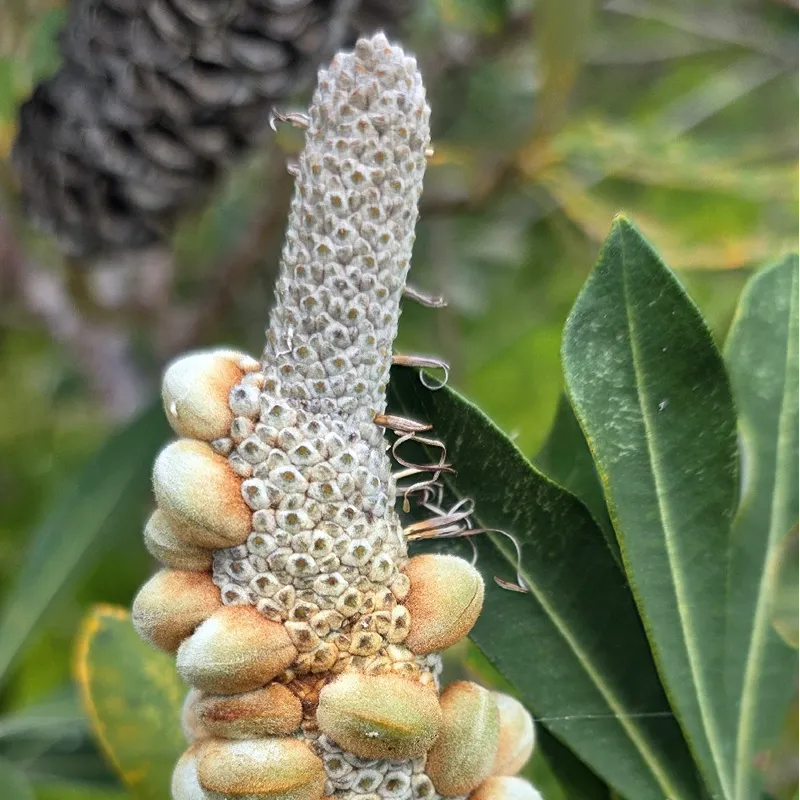
Coast Banksia
Banksia integrifolia
Born on the dunes and unbothered by salt. Its pale yellow candles feed honeyeaters, and its cones feed black cockatoos. Front-row material.
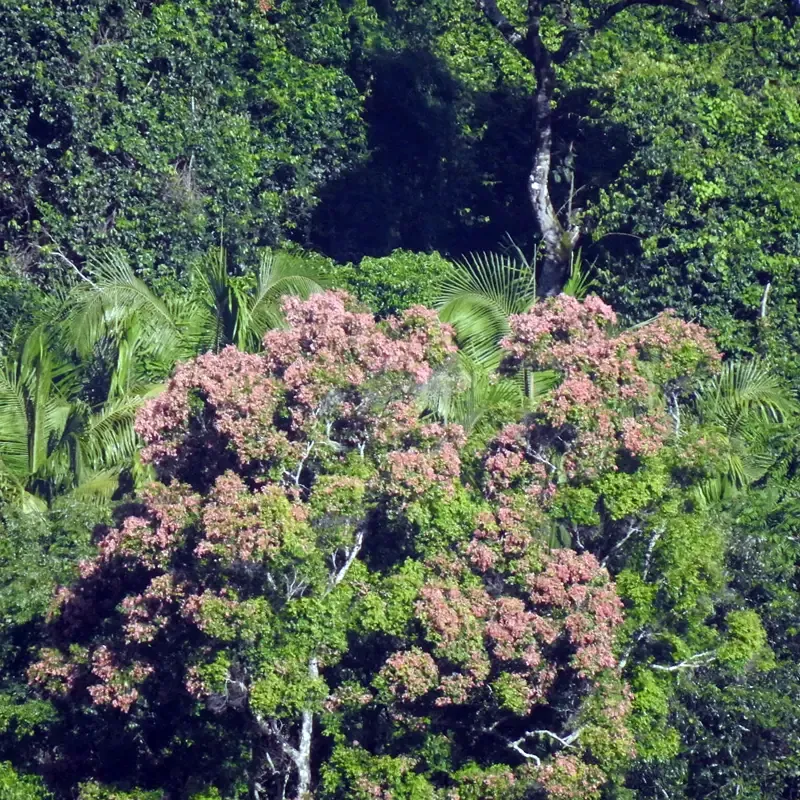
Riberry
Syzygium luehmannii
A local rainforest tree that flushes pink with new growth, then loads up with tangy red fruit. Jam for you, or a feast for the birds, whoever gets there first.
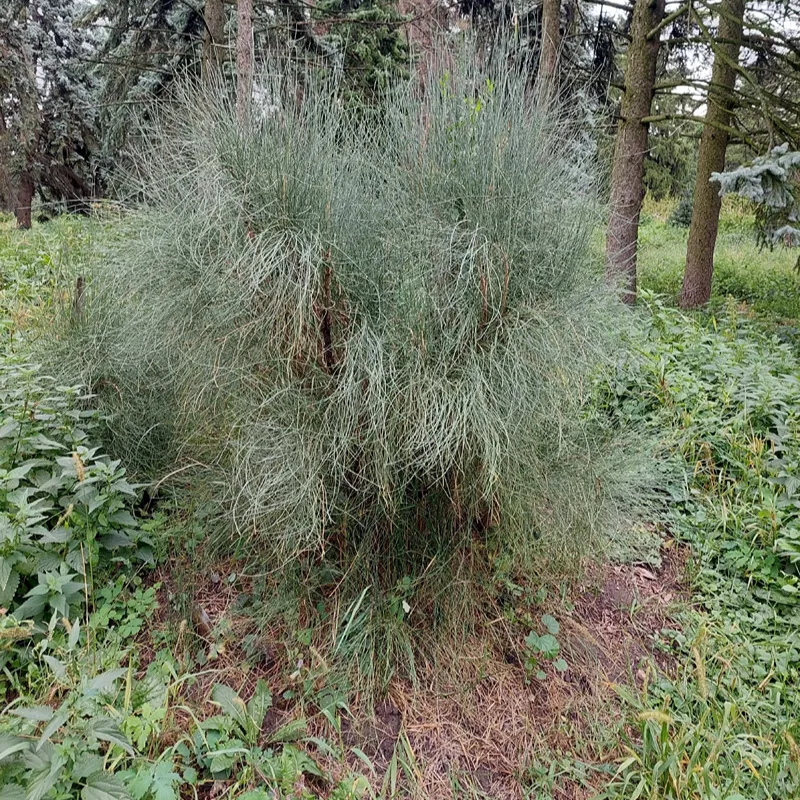
Swamp Oak
Casuarina glauca
Fine, grey-green needles that shrug off salt and wet feet, and whisper in the sea breeze. Made for canal edges.
Flowering shrubs
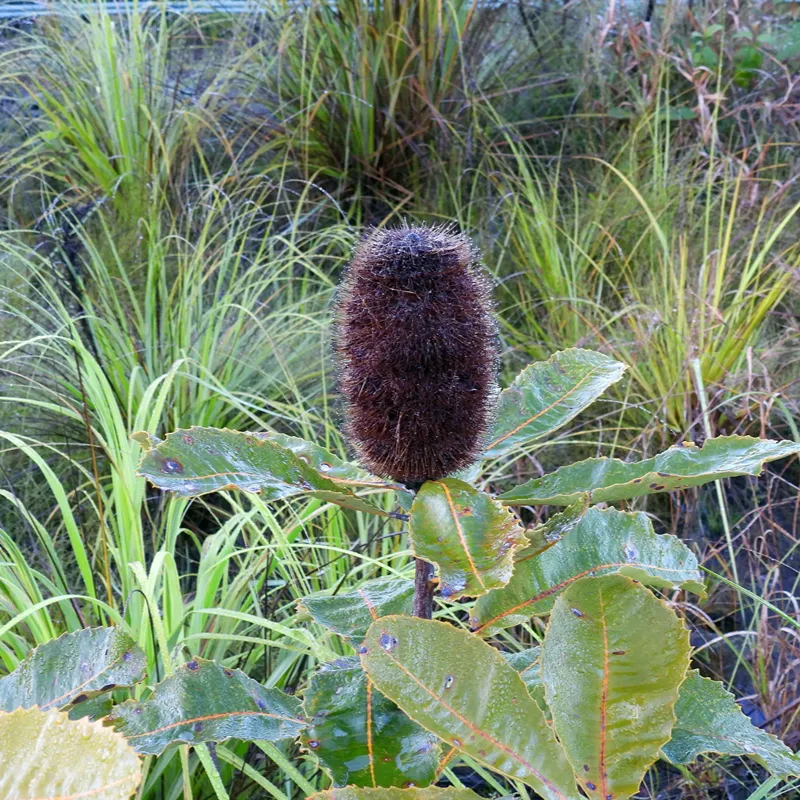
Swamp Banksia
Banksia robur
A chunky coastal banksia with big leathery leaves and greenish-yellow candles. It's happy in damp sand where other banksias drown.
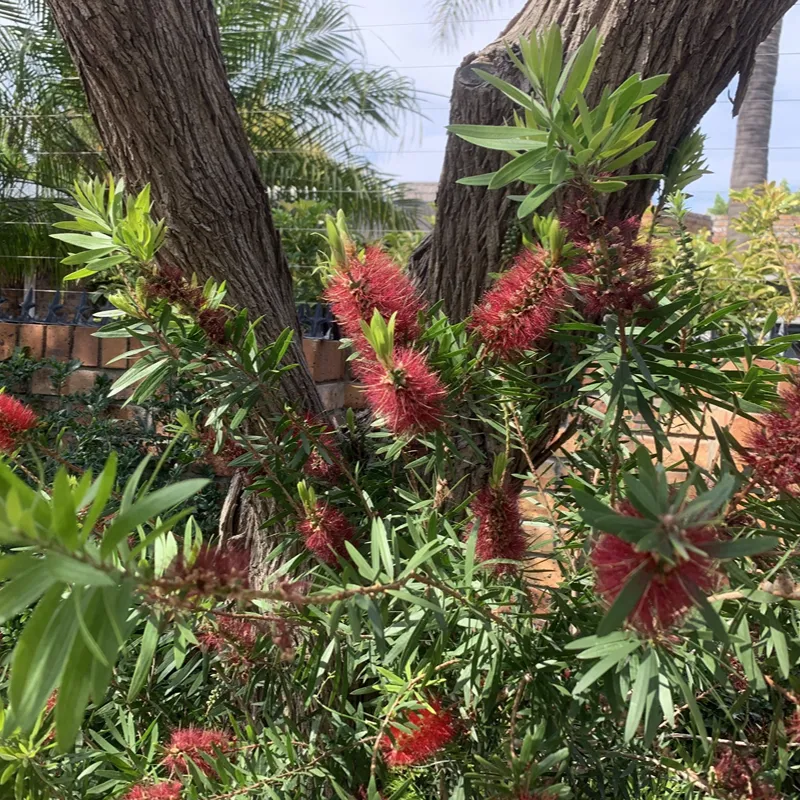
Weeping Bottlebrush
Callistemon viminalis
Red brushes on drooping branches, and a natural along creeks. Pick a dwarf form unless you want a small tree.
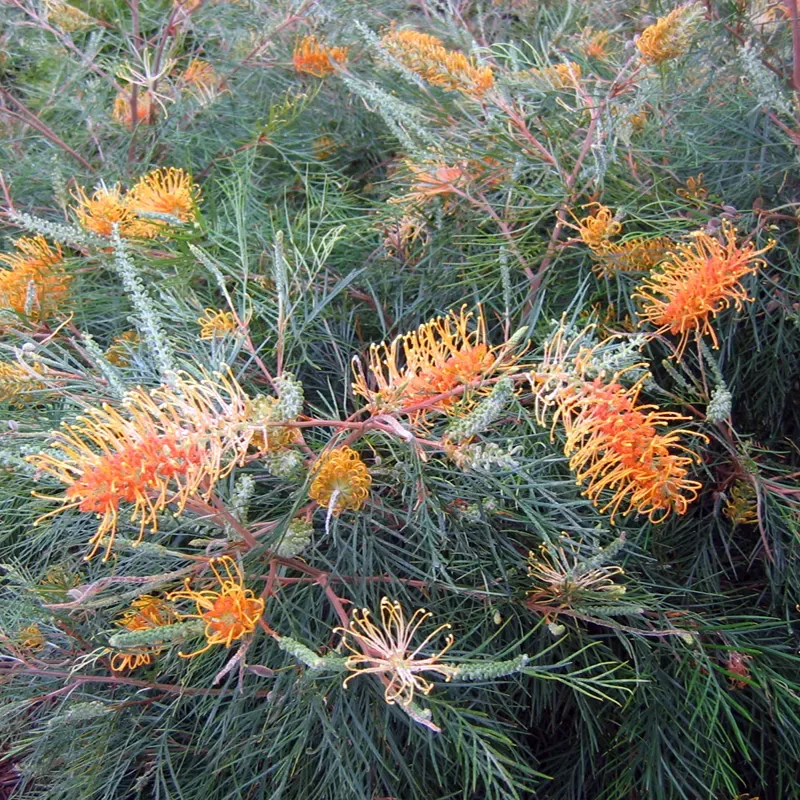
Honey Gem Grevillea
Grevillea 'Honey Gem'
Orange flower spikes dripping with nectar most of the year. The honeyeaters will find it before you've finished watering it in.

Lemon-scented Tea Tree
Leptospermum petersonii
Brush past it and the whole garden smells of lemon. A local with white spring flowers, and tough enough for coastal sand.
Hedges and screens
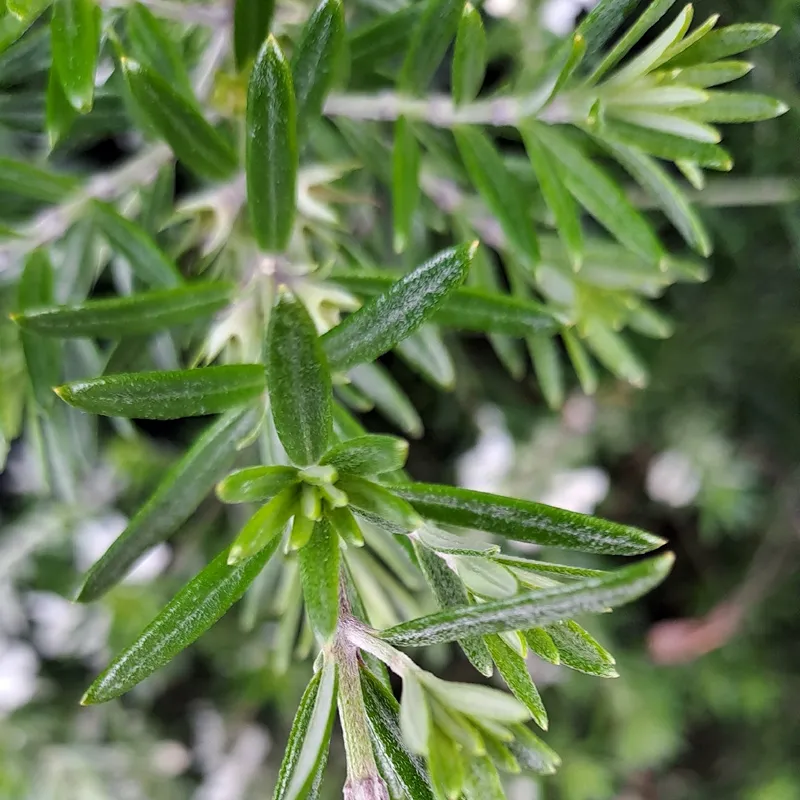
Coastal Rosemary
Westringia fruticosa
The seafront hedge. It takes salt spray head-on and keeps its shape whether you clip it tight or let it go loose.
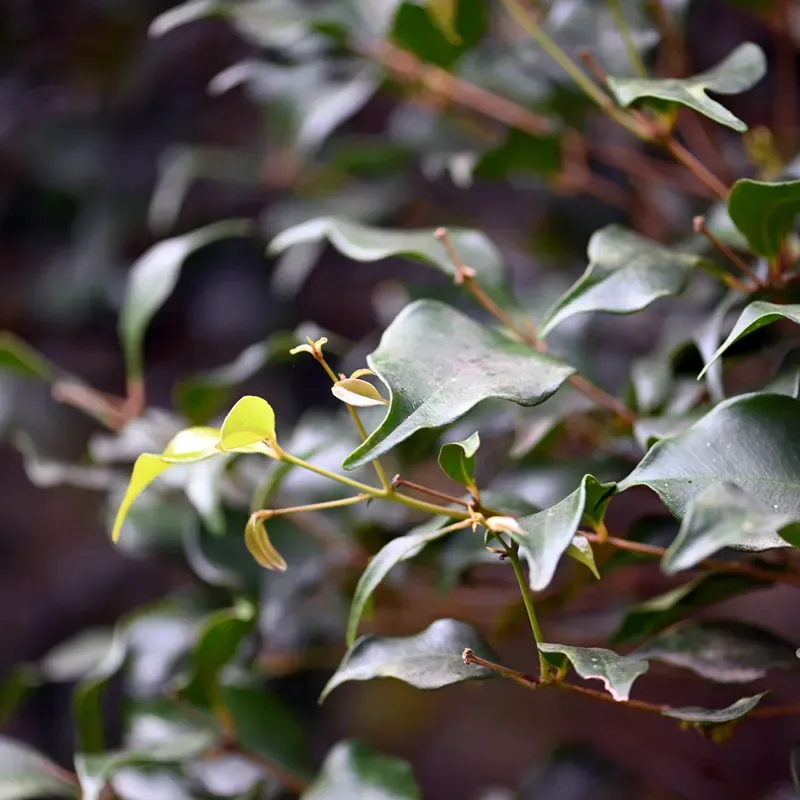
Common Lilly Pilly
Syzygium smithii
Dense, glossy rainforest greenery for the hinterland and foothills, with mauve-white berries the birds strip in days.
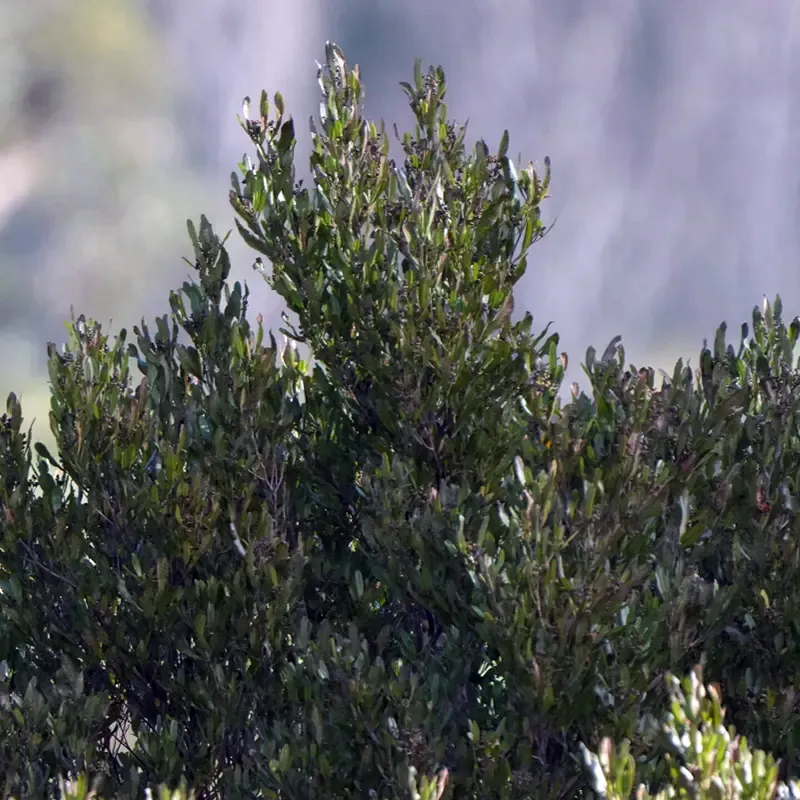
Sticky Hop Bush
Dodonaea viscosa
A fast, drought-proof screen for sandy spots. Its papery seed pods glow red when the late sun hits them.
Ground covers
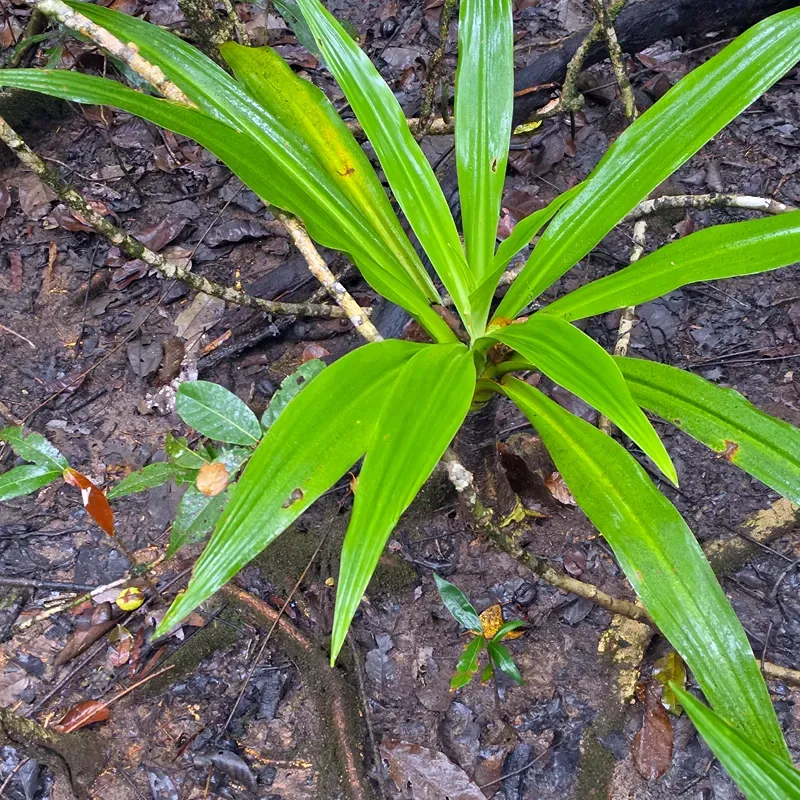
Swamp Lily
Crinum pedunculatum
Big, fragrant white flowers rising from a fountain of broad leaves. It grows wild on coastal creek banks.
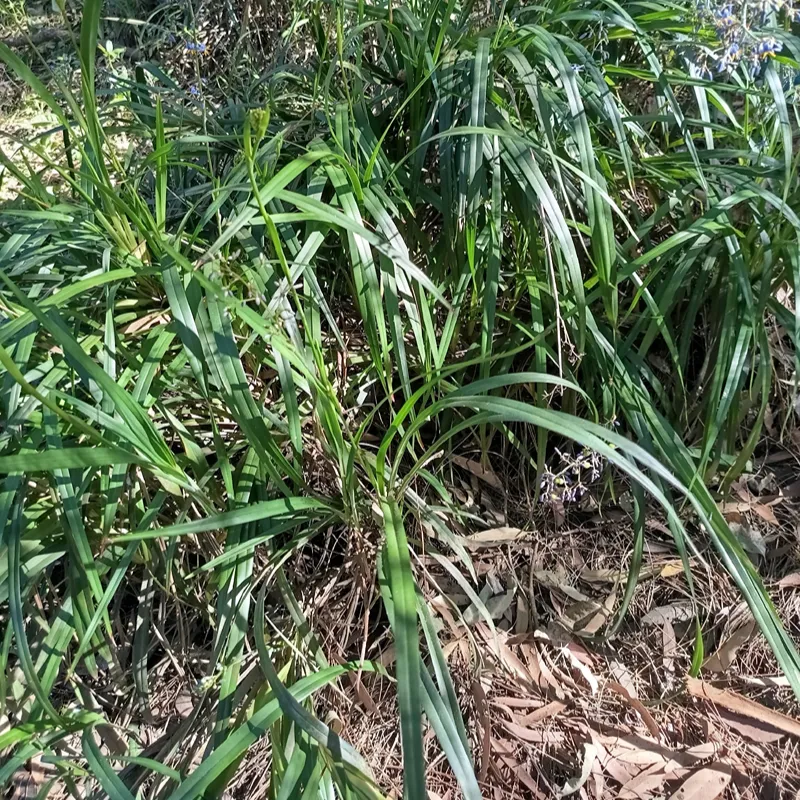
Blue Flax-lily
Dianella caerulea
Strappy leaves, blue flowers, then glossy blue berries, and it's happy in dry sand.
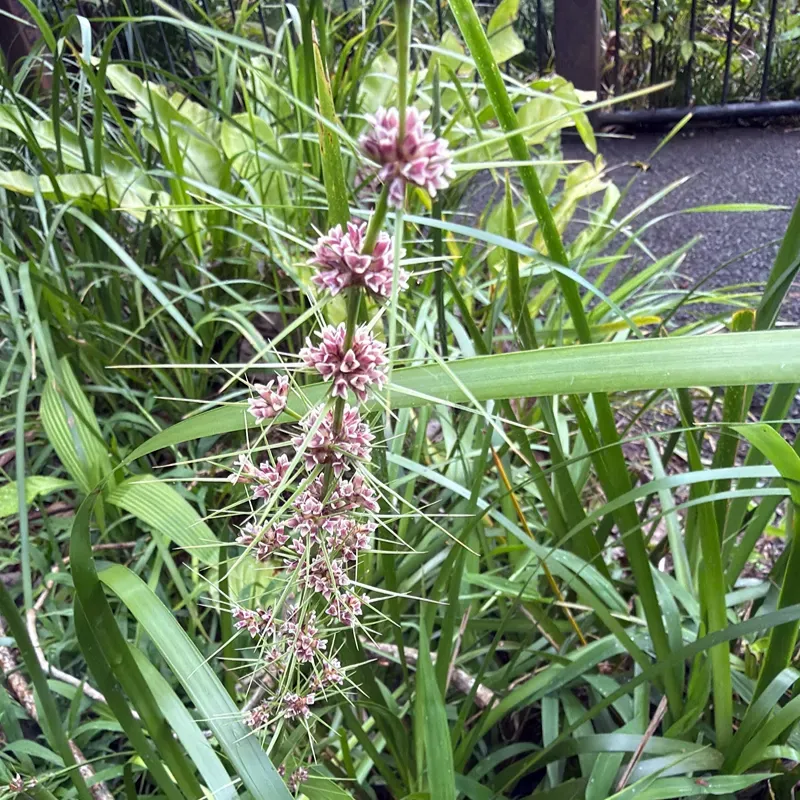
Green Mat-rush
Lomandra hystrix
The reliable clump for wet spots, drains and canal edges, where it soaks up run-off and asks for nothing.
Icons
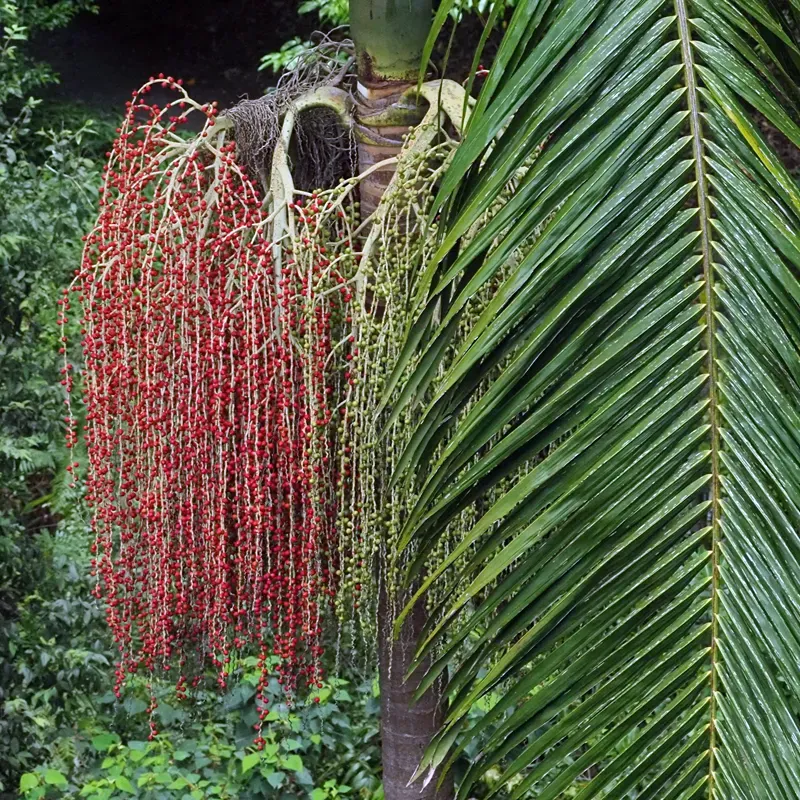
Bangalow Palm
Archontophoenix cunninghamiana
The feathery palm of the hinterland's rainforest gullies. Give it shade while young and water in summer, and it'll outgrow your patience.

Firewheel Tree
Stenocarpus sinuatus
Flowers like scarlet Catherine wheels, bursting straight off the branches in summer. A rainforest tree that rewards patience.
Gold Coast problems and what to plant
Salt spray on the beachfront. Put Coast Banksia, Coastal Rosemary and Swamp Oak on the seaward side as a living windbreak, and plant softer species in their shelter. Hose salt off young leaves after a big blow until they toughen up.
Pure sand. Mulch heavily, water deeply but rarely, and choose plants that evolved in dune country. Plant tubestock a little deeper than it sat in its pot, so the roots reach the cooler, moister sand below sooner. Once sand dries out it starts shedding water, so a wetting agent helps.
Heavy soil in the foothills. Plant on a low mound so roots sit above soggy summer soil, and rough up the sides of the planting hole so roots push into the clay instead of circling. Riberry, Lilly Pilly and Weeping Bottlebrush cope with heavier ground.
Brush turkeys. If a large black bird has raked your mulch into a mound the size of a small car, congratulations: you're hosting a brush turkey. They're protected natives, so work around them. Put rocks or wire mesh around the base of new plants, use coarse mulch that's harder to shift, and plant tubestock with a collar of wire until they're established.
Humidity. Many dry-climate natives sulk in a steamy Gold Coast summer. That said, the Regional Botanic Gardens grow Kangaroo Paw 'Bush Gold' successfully, so give the tougher kangaroo paw hybrids your sunniest, breeziest spot.
Where to buy native plants on the Gold Coast
The Gold Coast has community nurseries growing local plants, native specialists in the hinterland, and garden centres with solid native ranges. Check the list below for nurseries near you and who delivers.
Nurseries in Gold Coast
Birchgrove Nursery & Cafe
QLD
Paul's Plants
Carrara, QLD
Delivers to Gold Coast
Native gardens to visit on the Gold Coast
Gold Coast Regional Botanic Gardens in Benowa covers 31 hectares. Its Mangroves to Mountains trail walks you through the region's native vegetation in miniature, and there's a bush foods garden, a butterfly garden and a Yugambeh Story of Country garden. Bring the kids: there's a playground, and the lake is good for birdwatching.
Springbrook National Park shows what the hinterland's rainforest looks like in the wild: Gondwana rainforest, waterfalls and cool, wet plateau forest.
Tamborine Mountain Botanic Gardens mixes themed gardens with native plants of Tamborine Mountain itself, with giant native ferns framing the lake.
Gold Coast native gardening FAQ
When's the best time to plant natives on the Gold Coast?
Autumn, from March to May. The worst heat is over, and plants settle in before the drier spring.
What natives cope with salt spray?
Coast Banksia, Coastal Rosemary, Swamp Oak and Sticky Hop Bush. Plant them on the seaward side, and they'll protect the rest of the garden.
How do I stop brush turkeys wrecking my garden?
Protect the base of new plants with rocks or wire, use chunky mulch, and accept that they'll win the occasional round. They're protected, and the frantic mound-building eases off once the breeding season is over.
Can I grow rainforest plants near the beach?
In sheltered spots, yes, behind a salt-tolerant buffer and with extra water. On the front row, stick to dune plants.
Where can I see native gardens on the Gold Coast?
The Regional Botanic Gardens at Benowa, Tamborine Mountain Botanic Gardens, and the rainforest walks at Springbrook.
Browse all natives or start with a guide: Drought-tolerant native plants, Low-maintenance native plants, Small native trees, Plants for shade, Plants that attract birds, Summer-flowering natives for cool-temperate gardens.
Get natives matched to Gold Coast
Take the quiz with your exact postcode and we'll narrow this down to what actually suits your spot, not just the city average.
Take the quiz